「constitute」の意味と用法を整理する:compose・compriseとの違いまで|英検準1級・1級
なぎ
英検ひとさじノート
「acknowledge」という動詞、「認める」と覚えていても、admitやrecognizeとの違いを正確に説明できますか?議論・論述テーマで頻出のこの単語には、「公式に認める」「感謝して受け取る」など、日本語訳だけでは見えてこない重要なニュアンスがあります。
「認める」という行為は、英語では admit と acknowledge で性格が変わります。admit がやや後ろ向きな告白なら、acknowledge は知的誠実さの表れです。英検のライティングで反論を扱うとき、この違いが文章の格を決めます。
acknowledge を「認める」と覚えている人は多いでしょう。しかし、この訳語だけでは英検の長文で意味を正確に取れません。acknowledge には大きく分けて3つの顔があります。
「acknowledgeの本質は『知っていることを公に示す』こと。単なる内心の同意ではなく、『これが事実・現実である』と表明する社会的行為です。」
意味1:〜を認める・認識する(事実・存在の承認)
最も頻出の用法。acknowledge the problem(問題を認める)、acknowledge the fact(事実を認める)のように、「ある事実・状況・問題を公式に認識・承認する」ことを表します。admit との違いは、admit が「不都合なことを渋々認める」のに対し、acknowledge は「客観的に事実として認める」というニュアンスです。
意味2:〜に感謝する・功績を認める
acknowledge someone’s contribution(貢献を認める)、acknowledge one’s efforts(努力を称える)のように、「人の功績・貢献・努力を公式に認め称える」という用法。論文の謝辞(acknowledgements)でも使われる正式な表現です。
意味3:〜の受領を確認する・返答する
acknowledge receipt of(〜の受領を確認する)、acknowledge a letter(手紙を受け取ったと知らせる)のように、「受け取ったことを相手に知らせる」という用法。ビジネス文書・メールで頻出します。
💡 acknowledge は AWL Sublist 6 に収録されています。AWLについて詳しくは → AWL(学術英単語リスト)解説記事
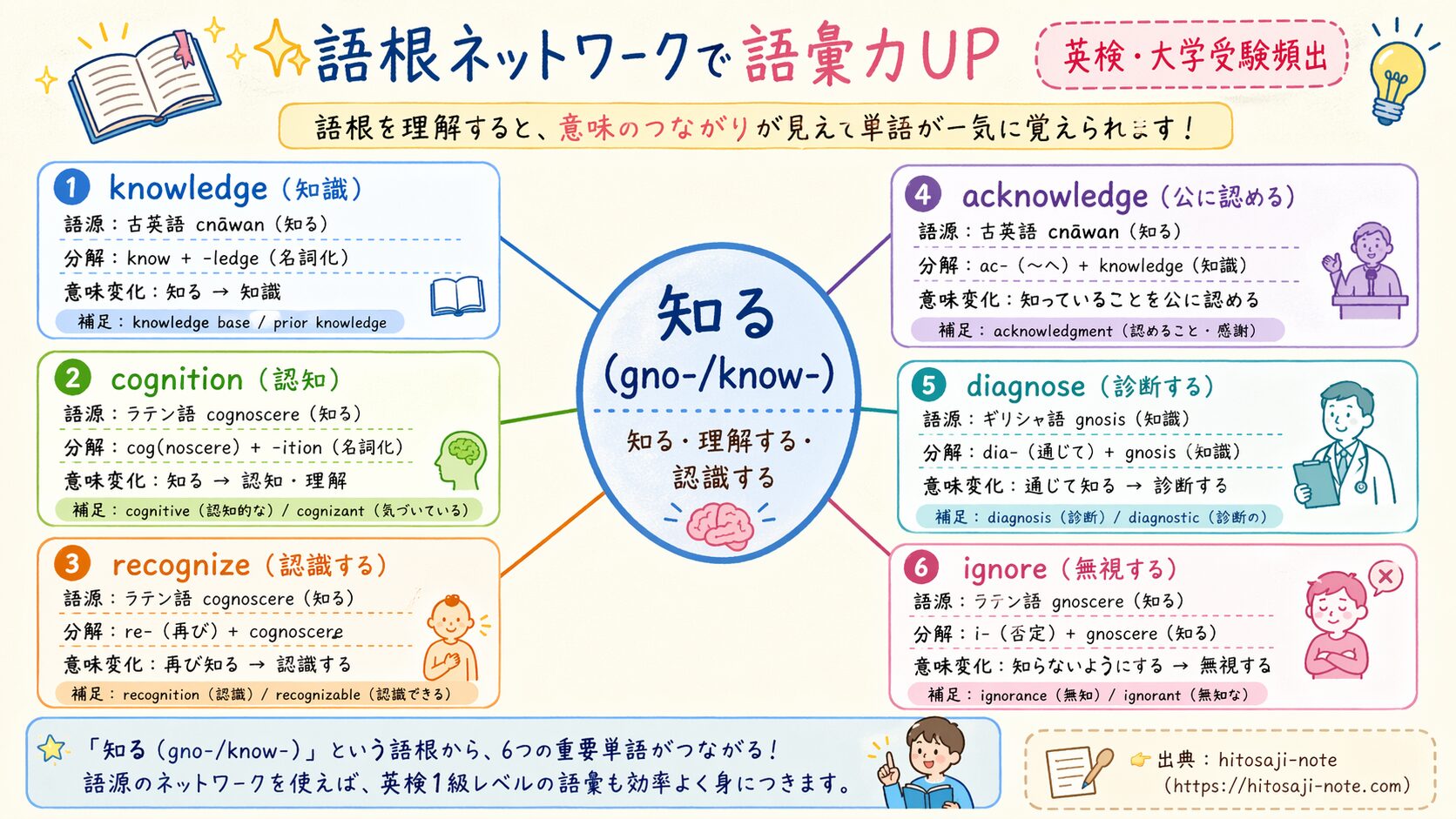
acknowledge の語源は古英語 oncnawan(知る)。これは on-(方向)+ cnawan(知る) に由来し、後に Middle English で “acknowledge” の形になりました。cnawan はゲルマン祖語 *knēaną(知る)に遡り、ラテン語の gnoscere とも同じインド・ヨーロッパ語根 *gneh₃-(知る)を共有しています。
「知る(gno-/know-)」という語根から、acknowledge(公に認める)・recognize(認識する)・cognition(認知)・diagnose(診断する)・ignore(無視する)が一気に覚えられます。英検1級の長文で頻出するこのネットワークは、語彙力を飛躍的に高めます。
acknowledge の最大の武器は、コロケーション(語の相性)を知ることで、議論・論述・社会テーマの長文を先読みできるようになる点です。以下の主要な組み合わせを、目的語が「承認・認知が必要なもの」であるという共通点と共に押さえてください。
共通パターンが見えたでしょうか。acknowledge の目的語には「承認・認知・確認が必要な事実・問題・貢献・必要性」が来ます。特に「It is widely acknowledged that …(〜は広く認められている)」は、英検の長文と英作文の両方で最頻出パターンです。
この法則を知っていれば、長文で acknowledge を見た瞬間に「何が公式に認められているのか」を即座に把握でき、文脈理解が格段に深まります。
英検のライティングや面接では、「語彙の正確性・適切性」が採点基準に含まれています。acknowledge を戦略的に使うと、「主観的意見」ではなく「客観的に認められた事実・現実」として主張することができ、論述の説得力が大幅に増します。
基本語との差別化ポイントを見てみましょう。
ライティングで使えるテンプレート表現を紹介します。
特に「While acknowledging A, we must also consider B」の構文は、英検ライティングで反論を考慮した上で自分の主張を述べる際の最強テンプレートです。面接でも「I acknowledge that … , however …」と切り出すだけで、語彙と論理構成の両方が高評価を受けます。
学術論文・政策提言書・国際報告書の世界では、acknowledge は「異論の余地がない事実」を示す強力な動詞です。「主張する(argue / claim)」よりも客観性が高く、「単に述べる(state / say)」よりも権威があります。
例:The committee acknowledged that previous policies had failed to address the root causes of poverty.
(委員会は、これまでの政策が貧困の根本的な原因に対処できていなかったことを認めた。)
※「認めた」=公式・正式に事実として受け入れたというニュアンス。admit より重みがある。
英検の選択肢問題で acknowledge が選択肢に現れたときの判別アルゴリズムは以下の通りです。
例えば、空欄の後ろが the fact / the need / the importance / the contribution であれば、acknowledge との相性は最高です。It is widely acknowledged that … というパターンは英検1級の長文冒頭・語彙問題で頻出します。
「認める」という行為を英語で表すとき、admit と acknowledge は似て非なる使い方をします。この違いを理解しているかどうかが、ライティングの格を決めます。
acknowledge が出てきたとき、「誰が・何を認めているか」に注目してください。admit が「不都合な事実を渋々認める」のに対し、acknowledge は「正式に・公的に認知する」という格調があります。長文では政府や専門家が問題を「公式に認める」場面で acknowledge が選ばれます。後ろには acknowledge that S+V と acknowledge doing の両方が来ます。
英検ライティングで「譲歩→主張」の構造を作るとき、acknowledge を使えると差がつきます。
❌ I know that some people think differently, but…
✅ I acknowledge that this approach has certain limitations; however, …
「知っている」より「正式に認める」を使うことで、反論を知的に受け止めたうえで乗り越えている姿勢が採点者に伝わります。
ここからは、acknowledge の使い方を実戦レベルで定着させるための例文を10個紹介します。英検の過去問や頻出テーマに基づいた例文で、文法ポイントも併せて解説します。これらの例文を通じて、acknowledge を完全にマスターしてください。
It is widely acknowledged that access to quality education is a fundamental human right.
(質の高い教育へのアクセスが基本的人権であることは、広く認められている。)
文法ポイント:It is widely acknowledged that … は「〜は広く認められている」という受動態の定型表現。英検ライティングで反論不可の事実を述べる際の最強フレーム。
The government finally acknowledged the need for more comprehensive mental health policies.
(政府はついに、より包括的なメンタルヘルス政策の必要性を認めた。)
文法ポイント:acknowledge the need for(〜の必要性を認める)の定型表現。finally(ついに)は「遅ればせながら」という含意を持つ副詞で、批判的文脈で頻出。
The Nobel committee acknowledged her groundbreaking contributions to cancer research.
(ノーベル委員会は、がん研究への彼女の画期的な貢献を正式に称えた。)
文法ポイント:acknowledge + 人’s contribution(〜の貢献を認める)。her は所有格で「彼女の」を示す。groundbreaking(画期的な)は英検1級頻出の形容詞。
While acknowledging the economic benefits of globalization, critics argue that it has deepened inequality.
(グローバル化の経済的利益を認めながらも、批評家たちはそれが格差を深めたと主張する。)
文法ポイント:While acknowledging A, B(Aを認めながらも、Bを主張する)は英検ライティングの反論考慮構文。分詞構文 acknowledging がwhile節に使われる高度な形式。
Scientists acknowledge that there is still much we do not understand about the human brain.
(科学者たちは、人間の脳についてまだ多くのことが解明されていないことを認めている。)
文法ポイント:acknowledge that + 節(〜であることを認める)。there is still much we do not understand は「理解できていないことがまだ多くある」という謙虚な表現で、科学・学術テーマで頻出。
The company publicly acknowledged its responsibility for the environmental damage caused by its operations.
(その会社は、自社の事業活動によって生じた環境被害に対する責任を公式に認めた。)
文法ポイント:acknowledge its responsibility for(〜に対する責任を認める)。publicly(公式に)の副詞が「公表・社会的承認」というニュアンスを強調。caused by …(〜によって生じた)は過去分詞の後置修飾。
He is universally acknowledged as one of the greatest composers of the twentieth century.
(彼は20世紀最大の作曲家の一人として、広く認められている。)
文法ポイント:be acknowledged as(〜として認められる)の受動態。universally(普遍的に)は最上級的な意味を持つ副詞。one of the + 最上級 + 複数名詞は「最も〜な〜の一人」という定型表現。
The report acknowledges that achieving carbon neutrality by 2050 will require unprecedented global cooperation.
(その報告書は、2050年までにカーボンニュートラルを達成するには、前例のない国際協力が必要になると認めている。)
文法ポイント:acknowledge that … will require(〜が必要になると認める)。achieving(動名詞)が主語の that節。carbon neutrality by 2050 は英検環境テーマの必須表現。
Failing to acknowledge cultural differences can lead to misunderstandings in international business negotiations.
(文化的な違いを認識しないことは、国際的なビジネス交渉での誤解につながりうる。)
文法ポイント:動名詞主語(Failing to acknowledge …)+ can lead to。「〜しないこと」という否定の動名詞主語(Failing to do)は英検1級で頻出する高度な構文。
It must be acknowledged that no single policy can solve the complex challenges of poverty and social exclusion.
(貧困と社会的排除という複雑な課題を、単一の政策で解決することはできないと認めなければならない。)
文法ポイント:It must be acknowledged that … は「〜と認めなければならない」という強調の受動態。no single(どんな単一の〜も〜ない)は英検上位級の否定強調表現。
📖 It is widely acknowledged that(受動態による客観的事実の表明)とは?
It is + 副詞 + acknowledged / known / accepted + that節で「〜は〜と認められている」という客観的事実を述べる。例:It is widely acknowledged that access to education is a fundamental right.(教育へのアクセスが基本的権利であることは広く認められている。)
📖 While acknowledging A, B(譲歩の分詞構文)とは?
While + -ing形で「Aを認めながら」という譲歩の副詞句を作る。例:While acknowledging the benefits, critics argue that …(利点を認めながらも、批評家たちは〜と主張する。)
📖 be acknowledged as(〜として認められる、受動態)とは?
be + 過去分詞 + as で「〜として見なされる・認められる」。例:He is universally acknowledged as one of the greatest composers.(彼は最大の作曲家の一人として広く認められている。)
📖 動名詞主語による否定表現(Failing to do)とは?
Failing to + 動詞原形が主語になる「〜しないこと」という動名詞否定表現。例:Failing to acknowledge cultural differences can lead to misunderstandings.(文化的違いを認識しないことが誤解につながりうる。)
📖 It must be acknowledged that(強調の受動態)とは?
It must be + 過去分詞 + that節で「〜と認めなければならない」という強調表現。例:It must be acknowledged that no single policy can solve the complex challenges.(複雑な課題を単一の政策で解決できないと認めなければならない。)
英検のライティングで acknowledge を使う前に、次の点を確認してください。
・admit との使い分けができているか
admit は「不都合な事実を認める」、acknowledge は「正式・公的に認知する」。論文的な格調が必要な場面では acknowledge を選びます。
・反論への向き合い方として使えているか
“I acknowledge that … ; however, …” という譲歩の構文は、英検ライティングで論理的な深みを作る最強パターンのひとつです。反論を正面から受け止めてから自説を展開する姿勢が、採点者に伝わります。
・that節と動名詞、両方の後続パターンを把握しているか
acknowledge that S+V / acknowledge doing の両形を使えると、文体の柔軟性が出ます。
「認める」という行為を、知的誠実さとして表現できる語が acknowledge です。使いこなせると、文章全体の信頼感が上がります。
空所に入る最も適切な語句を選んでください。
Q1.
The researcher publicly ( ) that the earlier findings contained a critical error and immediately published a formal correction.
✅ 正解:2. acknowledged
📖 訳:研究者は、以前の研究結果に重大な誤りが含まれていたことを公に「認め(acknowledged)」、ただちに正式な訂正を発表した。
📐 文型:S + V(acknowledged) + O(that節)(SVO)
acknowledge that ~(〜であることを認める)はSVOのthat節パターン。単に「知っている」のではなく、「事実として公に認める・受け入れる」という一歩踏み込んだニュアンスが重要です。deny(否定する)と対比して覚えましょう。
Q2.
The outstanding contribution to the research project was widely ( ) by the scientific community at the international conference.
✅ 正解:3. acknowledged
📖 訳:その研究プロジェクトへの僑出した貢献は、国際会議で科学界から広く「認められた(acknowledged)」。
📐 文型:
📐 文型:S + be widely acknowledged + by ~(受動態 SV)
be widely acknowledged(広く認められている)は受動態の最頻出形。副詞 widely(広く)とのコロケーションで「社会的・学術的に認知されている」意味を表します。be widely recognized との違いは、acknowledge がより「正式な承認」のニュアンスを持つ点です。